
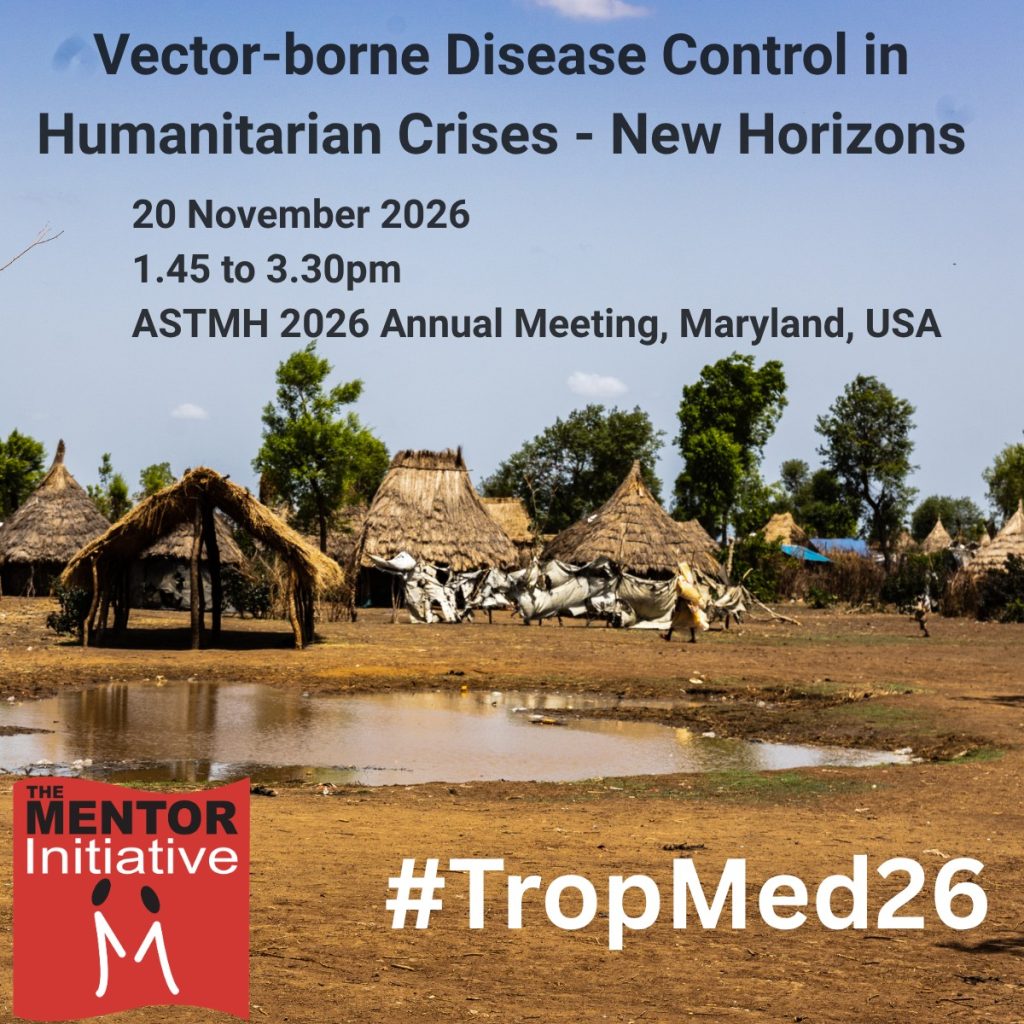
The UN estimates that by 2030 most of the world’s extreme poor will live in areas of fragility, conflict and violence. Post-2025 more than 123 million people were forcibly displaced by conflict and disasters, many living for prolonged periods in temporary shelters.
These populations face a substantial risk of malaria, dengue, leishmaniasis and other vector-borne diseases in rural, camp and urban settings.
Disrupted national disease control programmes and overburdened health services limit access to treatment and prevention. Whilst concomitant outbreaks, repeated re-infections, anaemia, undernutrition, insecurity and trauma increase the severity of the situation.
MENTOR is pleased to be hosting a symposium at American Society of Tropical Medicine and Hygiene (ASTMH) that will bring together humanitarian, infectious diseases and global health specialists to discuss how to reduce illness and death in these increasingly complex humanitarian settings.
Introduced by Dr Richard Allan OBE DIFASTMH speakers at the Vector-borne Disease Control in Humanitarian Crises – New Horizons symposium include:
Dr Allen Maina, UNHCR
Corey Leclair, MSF
Sergio Lopes, The MENTOR Initiative
Jason K Chau, Emergency Response Global Development Division, The Gates Foundation
Dr Louisa Messenger, UNLV
Dr. Maggie Montgomery, Water, Sanitation and Health Unit – World Health Organization
A roundtable Q/A discussion with panellists and audience members after the presentations will explore opportunities and challenges for partnerships to develop and bring to scale disease control prevention technologies and improved integration of shelter, WASH and health sectors. This is essential to reduce the scale of death and suffering that characterise present and future conflict zones and extreme weather events.
“Disease prevention in humanitarian crises remains fragmented, and opportunities to reduce death and suffering are frequently missed. Core disease control tools have often proven operationally ineffective in crises, despite significant successes in stable communities.
“Changes in climate and water resources have caused invasive vectors of flaviviruses such as dengue to spread at alarming rates across Africa and southern Europe. Vector-borne diseases are endemic in over 80% of countries impacted by conflict and displacement where different vector species drive pathogen transmission.
“The tailored integration of WASH interventions, improved shelter design and innovative control tools are critical to prevent vector- and water-borne diseases in humanitarian crises. Please join us on Friday to find out more.” – Dr Richard Allan, The MENTOR Initiative.
Details:
Symposium 80
Friday 20 November 2026
1.45 to 3.30pm