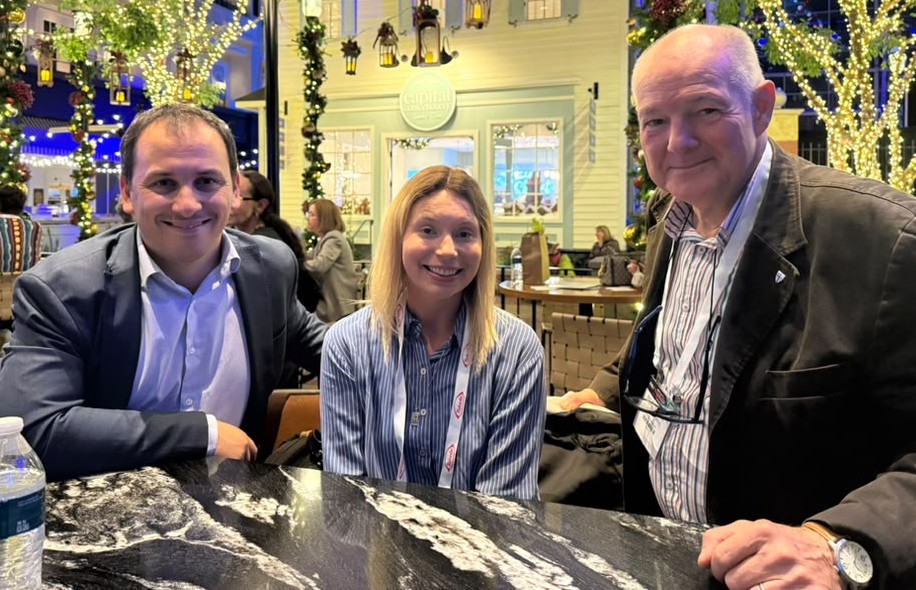
We’re back from another excellent ASTMH conference full of learning, conversations and gratitude to everyone who contributed and attended.
For the first time, MENTOR hosted a symposium bringing together the private, humanitarian, WASH and health sectors to address the challenges of vector control in humanitarian emergencies – recognising that progress is only possible through the cooperation and integration of multiple agencies.
The event opened with acknowledging the private sector who through innovation and robust research and development are bringing to market new tools to help control vector-borne diseases.
For all of us delivering vector control, it is thanks to partnerships with these dedicated companies that allow us to expand the toolbox and work in complex, challenging contexts.
The symposium highlighted the importance of new vector control tools that better suit the acute crisis stage where the forced displacement of people heightens the risk of diseases and core tools are not as effective. They include
- Long lasting larvicide discs for treating containerised water from jerry cans to large water tanks, which help control aedes and anopheles stephensi mosquitoes that lay eggs and develop their young in these perfect breeding sites.
- Attractive Toxic Sugar Bait traps kill adult flying and feeding mosquitoes of all species.
- Spatial emanators that reduce entry into shelters and biting of sandflies and multiple species of mosquitoes.
- Treated sheets/blankets/wraps that protect sleepers, including babies.
- Other innovations being tested by MENTOR and UNLV, to control filth flies and reduce diarrheal pathogen transmission to humans.
The benefits of these tools in humanitarian crises:
- New light weight tools increase portability and the feasibility of vector-borne diseases prevention in emergency settings.
- They are lower cost and less complex to ship internationally and internally in complex country settings.
- They are easier and faster to deploy to households and generally required fewer behavioural changes than nets for their success.
- Easier for households to use well, increased acceptability and retained well in studies and field deployments to date.
Alongside these tools, WHO, UNICEF and UNHCR have developed essential new technical guidance to improve the integration of WASH, health and shelter organisations for better disease control.
Their joined-up approach combines engineering solutions with chemical based tools to control sources of water, waste and faeces where insects breed, reducing operational costs of separate interventions by different organisations especially in urban settings.
MENTOR wishes to thank Gates Foundation, WHO, UNHCR and UNLV for contributing to the symposium. Participants brought operational research and field experience together to show the expanding toolbox is already proving to be a game changer for establishing early vector-borne disease prevention in crises and saving lives that otherwise would have been lost.