Over 3.8 million cases of malaria were reported in South Sudan in 2024, making it the leading cause of morbidity and mortality and accounting for 66.8% of outpatient consultations, 30% of hospital admissions, and approximately 50% of deaths. (WHO)
The risk of malaria increases due to the severe humanitarian crisis in the country caused by protracted conflict, climate shocks, economic instability and a fragile health system.
A major escalation of violence was recorded in several counties at the beginning of 2025, marked by intense clashes between government and opposition forces. This resulted in significant new internal displacement and a further deteriorating humanitarian situation.
South Sudan also hosts over half a million refugees across 30 locations in the country, mainly in refugee camps in Maban, Jamjang, Wedweil, and Gorom.
This figure has almost doubled since 2023 due to ongoing conflict in Sudan, worsening the humanitarian crisis across the region. South Sudan has received the second largest number of people fleeing Sudan, with more than 810,000 people having arrived since April 2023. (UNHCR in 2025)
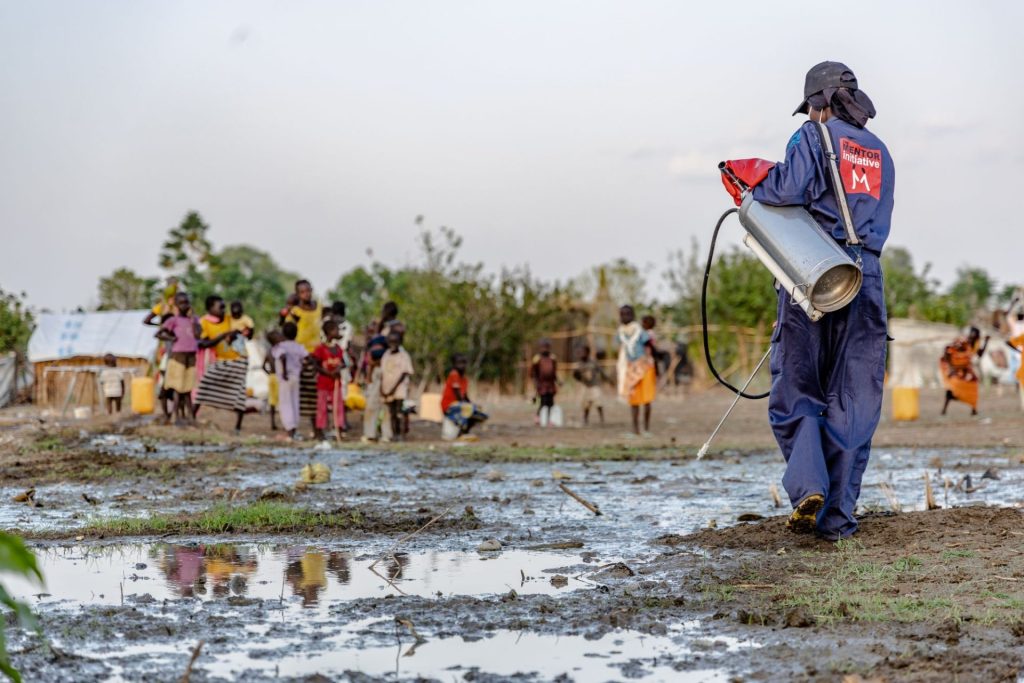
Protecting people from mosquito bites and preventing the spread of malaria in refugee camps is a complex challenge. In these vulnerable settings, integrated vector management is critical to save lives and needs to be the ongoing priority for resources and funding.
For more detail, watch this film from Maban County about our campaign supporting integrated vector management activities such as residual spraying and larviciding in refugee camps last year: Link
As part of the programme, MENTOR also supported the distribution of spatial repellents in refugee camps and host communities in Jamjang and Renk, reaching over 120,000 people through this innovative new tool