
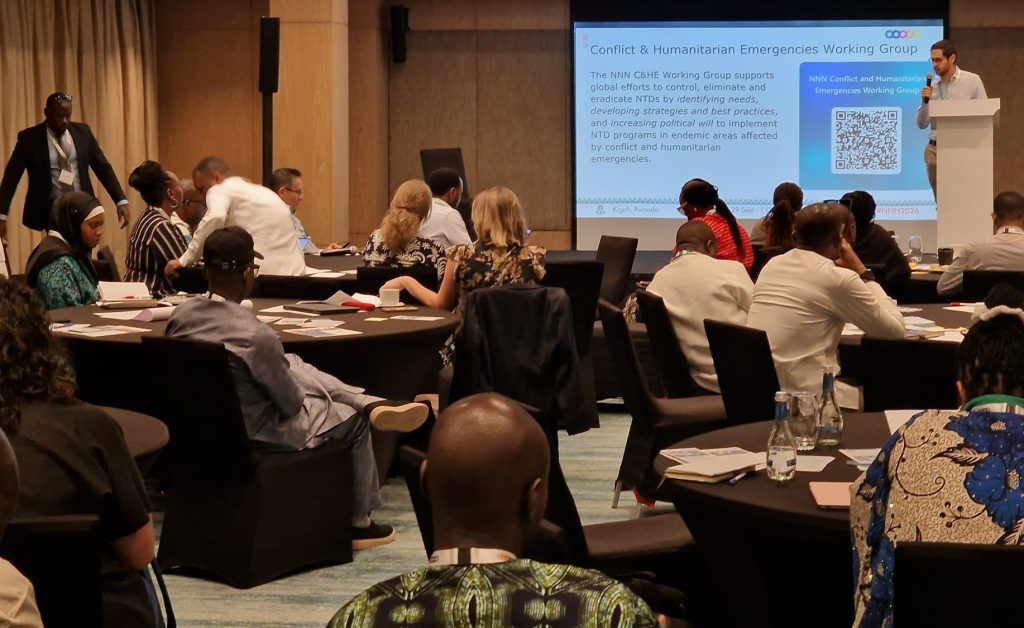
The 2026 NTD NGO Network (NNN) annual conference was held last week in Kigali, bringing together organisations and individuals dedicated to ending neglected tropical diseases.
A key focus in several sessions at the conference was integration and exploring the different definitions. It was largely understood to include integrating delivery across different NTDs, integrating NTDs into domestic financing, integrating with other health interventions, or working beyond the health sector.
It was also agreed that integrating activities and programmes should be pursued when it is cost effective and the interventions are of high quality – rather than the goal. More documentation and evaluation are needed to share the challenges, successes and failures of integration in practice.
This year’s event was shaped by WHO’s mid-term review of the 2030 NTD road map, after the road map passed its midpoint in 2025. Whilst important advances towards the elimination of some neglected tropical diseases were celebrated, funding has decreased globally over the past year, and programmes have had to adapt to deliver within tighter constraints.
Reduced funding has severely impacted NTD control in conflict and humanitarian settings. Reaching people in these settings is increasingly challenging and without more funding, research, implementation and support, many communities risk being left behind as others move towards elimination.
MENTOR Programme Manager Xavier Badia hosted a workshop on NTDs in conflict and humanitarian emergencies as the Chair of the cross-cutting working group. He also presented at the SCH-STH Disease Specific Working group, highlighting the gaps and opportunities for reducing these neglected tropical diseases in vulnerable settings.
The presentation helped bring this group together with the Conflict and Humanitarian Emergencies Working Group and join efforts to eliminate the two NTDs.
MENTOR recently joined the International Coalition for Trachoma Control (ICTC) as a member and attended the disease specific group session addressing trachoma at the conference. Xavier Badia, said: “We are committed to contribute to global trachoma elimination efforts and look forward to working with colleagues and partners to stop the suffering it causes.”