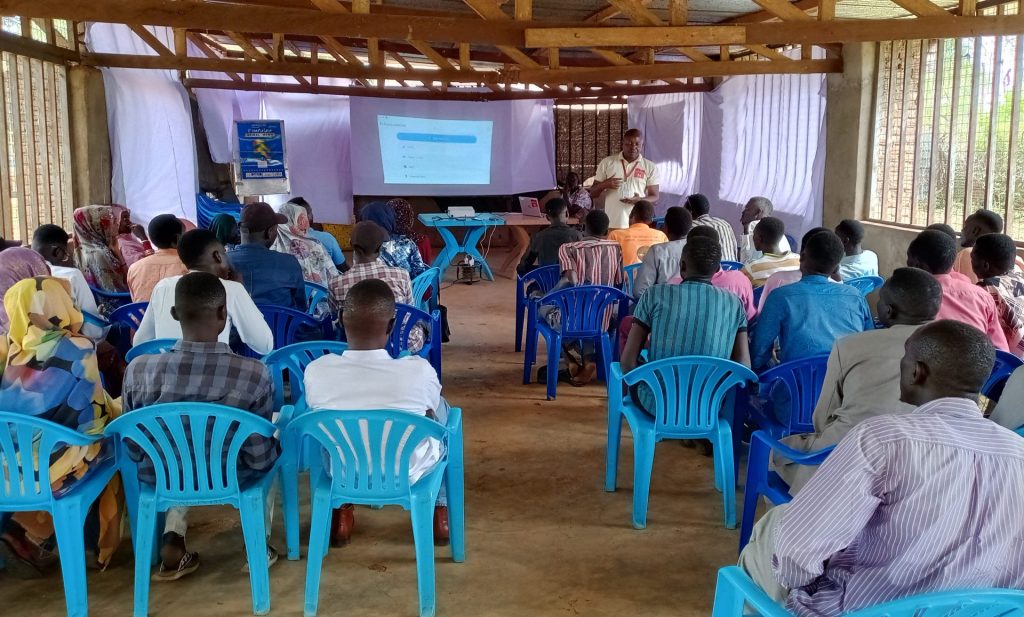
Study supervisors and surveyors from four refugee camps in Maban County, South Sudan, recently completed epidemiological survey training ahead of a three-year research study on filth flies and the transmission of diarrhoeal pathogens in humanitarian settings.
MENTOR’s study will evaluate the effect of two innovative vector-control tools on filth fly populations with the aim of contributing to reducing diarrhoeal diseases in vulnerable settings.
Eight study supervisors and 53 surveyors were recruited across all the camps in close collaboration with camp management and refugee communities.
Practical training sessions covered the use of KoBo Toolbox, standardised data collection methods, research ethics and quality assurance procedures. The training enables the teams to collect accurate, high-quality data throughout the survey.
The field team will shortly carry out household baseline surveys, mapping each shelter using GPS and collecting information such as shelter characteristics, water, sanitation and hygiene (WASH), and access to health services.
The baseline data will help improve understanding of the factors associated with filth fly populations and diarrhoeal diseases.