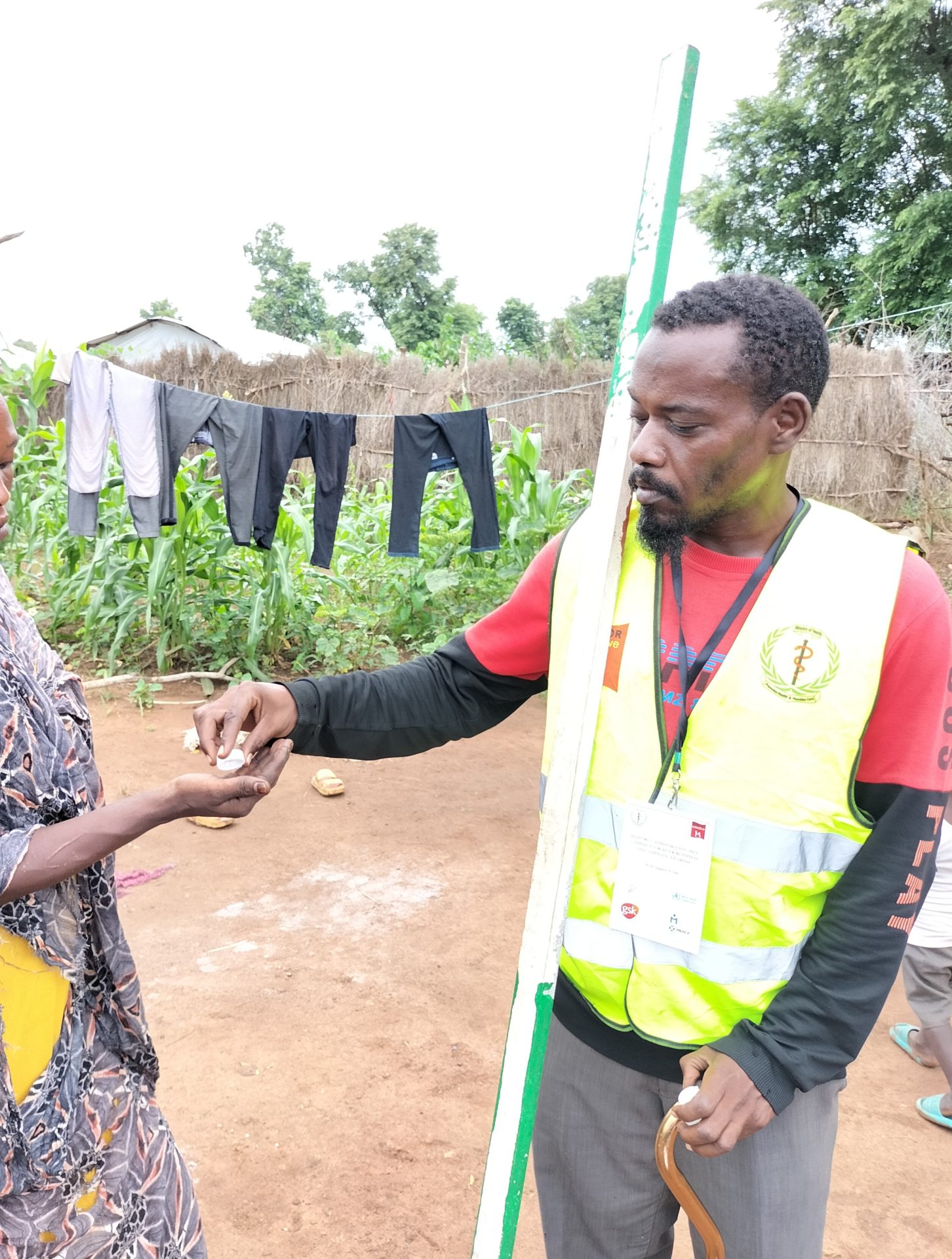
The Ministry of Health in South Sudan, supported by The MENTOR Initiative and The Carter Center through the Reaching the Last Mile Fund (RLMF), conducted a mass drug administration (MDA) campaign in October 2025 as part of ongoing efforts to eliminate neglected tropical diseases (NTDs). The campaign aimed to protect refugee communities from lymphatic filariasis and onchocerciasis (river blindness).
Among the dedicated team of health workers and community volunteers was Mustafa Siliman, a blind social mobilizer whose story became a powerful symbol of inclusion, determination, and hope. Living with visual impairment in a refugee setting presents numerous barriers—limited accessibility, stigma, and mobility challenges.
Initially, many in the community questioned whether someone like Mustafa could effectively mobilize households for MDA activities. But Mustafa was determined to demonstrate that disability does not mean inability.
Mustafa’s involvement not only strengthened the campaign’s impact but also helped challenge negative stereotypes about people with disabilities within the camp. His story underscores the importance of inclusive approaches in humanitarian health interventions ensuring that no one is left behind.
The MDA in Maban refugee camps treated 82,249 refugees addressing lymphatic filariasis and onchocerciasis and was aimed at everyone over 5 years old living in Kaya, Doro, Gendrassa and Yusuf Batil camps. The administration of ivermectin and albendazol was to stop the transmission of parasites that cause these NTDs and progressing towards the elimination of these diseases in the country.
Together with this activity, training of community drug distributors from the refugee population took place in Maban before the distribution. A total of 870 community drug distributors, 99 social mobilizers, and 104 supervisors were trained and engaged during the campaign.